Showing posts sorted by relevance for query gospel. Sort by date Show all posts

Saturday, October 7, 2017

The Gospel of the Kingdom

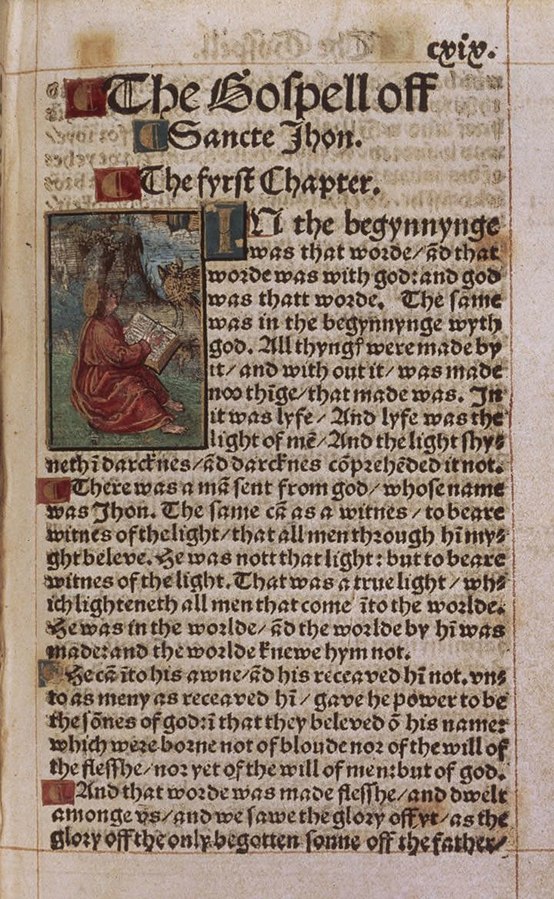
The Tyndale Bible1

"When they therefore were come together, they asked of him, saying, Lord, wilt thou at this time restore again the kingdom to Israel" (Act 1:6).

The eleven were asking in regard to the "redemption" of Israel -- the fulfillment of kingdom prophecy when the Lord will rule the earth with the "Law of Moses" and a "rod of iron" and the mandate of the Sermon on the Mount, and "out of Zion shall go forth the law and the word of the LORD from Jerusalem" (cf. Isaiah 2:1-3).

As our Lord concluded His earthly ministry, His answer morphed into a directive to, once again, preach the "gospel of the kingdom," as in Matthew 10, but this time in the power of the Spirit, witnessing unto Him "both in Jerusalem, and in all Judaea, and in Samaria, and unto the uttermost part of the earth" (cf. Act 1:8).


However, are we to preach the "gospel of the kingdom" today?
"I marvel that ye are so soon removed from him that called you into the grace of Christ unto another gospel: Which is not another; but there be some that trouble you, and would pervert the gospel of Christ. But though we, or an angel from heaven, preach any other gospel unto you than that which we have preached unto you, let him be accursed. As we said before, so say I now again, If any man preach any other gospel unto you than that ye have received, let him be accursed" (Gal 1:6-8).
Our Lord's "gospel of the kingdom" was a wonderful gospel, and would have been a "glorious" one had Israel accepted it. Yet, it was the "quintessential" gospel, for by it came "the propitiation for our sins: and not for ours only, but also for the sins of the whole world"! 

However, during this age of grace our "glorified" and "ascended" Lord "revealed" to Paul what he refers to as "my gospel." Paul's gospel is a gospel by which "God shall judge the secrets of men by Jesus Christ" (cf. Rom_2:16), a gospel "kept secret since the world began," (cf. Rom_16:25), a gospel by which "Jesus Christ of the seed of David was raised from the dead" (cf. 2Ti_2:8), a gospel that supersedes Israel's "gospel of the kingdom," ONLY during this "dispensation of grace"! But when the Body of Christ and the Spirit within her is removed the earth, the "gospel of the kingdom" will resume unabated, until it becomes the "glorious" gospel God originally intended.

"For do I now persuade men, or God? or do I seek to please men? for if I yet pleased men, I should not be the servant of Christ. But I certify you, brethren, that the gospel which was preached of me is not after man. For I neither received it of man, neither was I taught it, but by the revelation of Jesus Christ" (Gal 1:9-12).


1By Peter Schöffer (printer); William Tyndale (British Library Board) [Public domain], via Wikimedia Commons https://commons.wikimedia.org/wiki/File%3ATyndale_Bible_-_Gospel_of_John.jpg https://upload.wikimedia.org/wikipedia/commons/d/d0/Tyndale_Bible_-_Gospel_of_John.jpg

©2017 Christian. Textual content may be copied and distributed, but it may not be sold.

Monday, December 10, 2018

The Everlasting Gospel

Paradise Lost, Gustave Doré1


"They, looking back, all the eastern side beheld Of Paradise, so late their happy seat, Waved over by that flaming brand; the gate, With dreadful forces thronged, and fiery arms Some natural tears they dropped, but wiped them soon; The world was all before them, where to choose Their place of rest, and Providence their guide; They, hand in hand, with wandering steps and slow, Through Eden took their solitary way."


And I saw another angel fly in the midst of heaven, having the everlasting gospel to preach unto them that dwell on the earth, and to every nation, and kindred, and tongue, and people” (Revelation 14:6).
 “The Everlasting Gospel” was the gospel preached “from the beginning,” and the gospel to be proclaimed until the “End” ─ Yet for a singular age ─ The "Dispensation of Grace" it was a curse, i.e., anathema
 “But though we, or an angel from heaven, preach any other gospel unto you than that which we have preached unto you, let him be accursed" (Galatians 1:8). 
 Enoch, the seventh from Adam, prophesied of “raging waves of the sea, foaming out their own shame; wandering stars, to whom is reserved the blackness of darkness for ever” (cf. Jude 1:13).

 And Enoch preached “The Everlasting Gospel” “Behold, the Lord cometh with ten thousands of his saints, To execute judgment upon all, and to convince all that are ungodly among them of all their ungodly deeds which they have ungodly committed, and of all their hard speeches which ungodly sinners have spoken against him” (cf. Jude 1:14-15). 

Noah, an heir of the righteousness which is by faith ─ “Being warned of God of things not seen as yet, moved with fear, prepared an ark to the saving of his house; by the which he condemned the world” (Hebrews 11:7). 

And Noah “a preacher of righteousness” proclaimed “The Everlasting Gospel” of Judgement of the unrepentant ─ “bringing in the flood upon the world of the ungodly” (2 Peter 2:5). 
But as the days of Noe were, so shall also the coming of the Son of man be. For as in the days that were before the flood they were eating and drinking, marrying and giving in marriage, until the day that Noe entered into the ark, And knew not until the flood came, and took them all away; so shall also the coming of the Son of man be" (Matthew 24:37-39). 
In the beginning God proclaimed “The Everlasting Gospel” in the garden 
But of the tree of the knowledge of good and evil, thou shalt not eat of it: for in the day that thou eatest thereof thou shalt surely die” (Genesis 2:17). 
And it will be proclaimed again in "End" by an angel flying in the midst of heaven:
Saying with a loud voice, Fear God, and give glory to him; for the hour of his judgment is come: and worship him that made heaven, and earth, and the sea, and the fountains of waters” (Revelation 14:7).

 See also: 
 The Gospel of the Kingdom

 1By Gustave Doré - in the public domain due to expiration of copyright.

 ©2018 Christian. Textual content may be copied and distributed, but it may not be sold. https://a-hillside-church.blogspot.com/

Friday, May 28, 2021

Doctrine of Mystery

 We speak God’s wisdom in a mystery, even the wisdom that hath been hidden, which God foreordained before the world unto our glory” (1Co 2:7).

The doctrine of the “mystery” is essentially as much a mystery today as it was before it was revealed almost 2000 years ago. It is to be found in only one “Book” – and in part, it is the gospel wherein we stand… by which also we are saved (cf. 1Co 15:1-2).

There was once “another” gospel whereby men were saved ─ but when a “dispensation of the gospel” was committed unto Paul (cf. 1Co 9:17) ─ that previously imparted began to vanish away. 

Although Paul’s “gospel” is but one facet of the mystery reveled in his epistles ─ it is the one of “eternal” consequence, for ─ he declares: “in the day when God shall judge the secrets of men by Jesus Christ,” it will be“according to my gospel” (cf. Rom 2:16). 

Any other gospel, Paul contends is an “anathema”!

But though we, or an angel from heaven, preach any other gospel unto you than that which we have preached unto you, let him be accursed” (Gal 1:8). 

“As we said before, so say I now again, If any man preach any other gospel unto you than that ye have received [from us], let him be accursed” (Gal 1:9). 

There many other facets of the mystery — however, seems best to confine ourselves to this “until the righteousness of the law … be fulfilled in us, who walk not after the flesh, but after the Spirit” (cf. Rom 8:4). 

Paul prayed: “that utterance may be given unto me, that I may open my mouth boldly, to make known the mystery of the gospel, For which I am an ambassador in bonds: that therein I may speak boldly, as I ought to speak” (cf. Eph 6:19-20).

And once again in his Romans doxology (16:25-27): “Now to him that is of power to stablish you according to my gospel, and the preaching [proclamation and heralding] of Jesus Christ, according to the revelation of the mystery, which was kept secret since the world began, 

But now is made manifest, and by the scriptures of the [New Testament] prophets, according to the commandment of the everlasting God, made known to all nations for the obedience of faith: 

To God only wise, be glory through Jesus Christ for ever. Amen.”

Tuesday, October 9, 2018

Moral Confusion


Papyrus 46, 2 Corinthians 11:33-12:9.1
“Whatever was the fate of the moral fence posts we began removing in the ’60s, the job today is figuring out how to get that fencing back in place” writes a conservative columnist this morning.2 

Yet, the reality is “Moral fence posts” are but an illusion ─ an illusion that leads to “hell” ─ we are not saved “by” moral living, we are saved “for” moral living! 

We can never be moral enough ─ that is why the Son of God had to die for each and every sin we have ever committed ─ or ever will commit ─ we are saved by His grace when we call upon the “name of the Lord” ─ believing the gospel: 

 “I declare unto you the gospel… . By which also ye are saved… how that Christ died for our sins according to the scriptures And that he was buried, and that he rose again the third day according to the scriptures” (cf. 1 Corinthians 15:1-4). 

For the love of Christ constraineth us; because we thus judge, that if one died for all, then were all dead: And that he died for all, that they which live should not henceforth live unto themselves, but unto him which died for them, and rose again” (2 Corinthians 5:14-15). 


However, how shall they call upon the name of the Lord and be saved? “How then shall they call on him in whom they have not believed? and how shall they believe in him of whom they have not heard? and how shall they hear without a preacher? And how shall they preach, except they be sent?” (cf. Romans 10:14-15). 

 “As it is written, How beautiful are the feet of them that preach the gospel of peace, and bring glad tidings of good things,” the apostle Paul was that preacher, and each of us are to be that preacher today! 

See also: 
The Gospel 
The Church a Mystery? 
The Gospel of the Kingdom


1Public Domain, https://commons.wikimedia.org/w/index.php?curid=612499

2William Murchison, The American Spectator, “Of Moral Messes — and Traps,” October 9, 2018.

©2018 Christian. Textual content may be copied and distributed, but it may not be sold. https://a-hillside-church.blogspot.com/

Thursday, April 13, 2017

A Mystery

The final facet of the mystery of His will.1

"We speak God's wisdom in a mystery, even the wisdom that hath been hidden, which God foreordained before the world unto our glory" (1Co 2:7).

Please share my "nascent" understanding of what Paul refers to as "mystery" mystērion; a derivative of muo (to shut the mouth). English translations frequently fail to convey Paul's precise intent in using the transliteration "mystērion," which is "that which in other ages was not made known unto the sons of men, as it is now revealed". Therefore, "the mystery" Paul in the "fullness of times" revealed is no longer a mystery, nor should it be considered mysterious.

Paul's epistles refer to a number of explicit mysteries, yet there is a consonance, suggesting that even in their distinctiveness they are "one," even as a brilliant-cut diamond has many facets, so do the mysteries of Paul's epistles, i.e., all being facets of His comprehensive "will" spanning this "dispensation of the grace of God."

The story of the "mysteries" in Paul's epistles begin where we are told that "by revelation He made known" unto Paul "the mystery" "which in other ages was not made known unto the sons of men, as it is now revealed unto his holy [New Testament] apostles and prophets by the Spirit" (cf. Eph 3:3-5).

The first facet, to which all others appear subordinate, is the "the mystery of his will," i.e., the "will of the God and Father of our Lord Jesus Christ." "That in the dispensation of the fulness of times he might gather together in one all things in Christ, both which are in heaven, and which are on earth" in our Lord Jesus Christ (cf. Eph 1:9-10).

Or as John Nelson Darby so eloquently observed: "It is a marvellous purpose of God which, uniting redeemed ones to Christ in heaven as a body to its head, gave them a place in heaven. For, although we are journeying on the earth, and although we are the habitation of God by the Spirit on the earth, yet in the mind of God our place is in heaven."

The gathering "together in one all things in Christ" infers "the mystery of Christ... That the Gentiles should be fellow heirs, and of the same body, and partakers of his promise in Christ by the gospel whereof... [Paul] "was made a minister, according to the gift of the grace of God" (cf. Eph 3:4-7).

Before this mystery, Jews were a "chosen" people "above all people... upon the face of the earth." Today the Jew and Gentile are "one" in the Body of Christ. However, after the "final" mystery, all things will be as before. 

The mystery of the gospel

"Now to him that is able to establish you according to my gospel and the preaching [(proclamation)] of Jesus Christ, according to the revelation of the mystery which hath been kept in silence through times eternal, but now is manifested, and by the [New Testament] Scriptures of the prophets, according to the commandment of the eternal God, is made known unto all the nations unto obedience of faith" (Rom 16:25-26).

The mystery of the blindness of Israel:

"For I would not, brethren, that ye should be ignorant of this mystery, lest ye should be wise in your own conceits; that blindness in part is happened to Israel, until the fulness of the Gentiles be come in. And so all Israel shall be saved: as it is written, There shall come out of Sion the Deliverer, and shall turn away ungodliness from Jacob" (Rom 11:25-26).

"And it shall come to pass in that day, that I will seek to destroy all the nations that come against Jerusalem. And I will pour upon the house of David, and upon the inhabitants of Jerusalem, the spirit of grace and of supplications: and they shall look upon me whom they have pierced, and they shall mourn for him, as one mourneth for his only son, and shall be in bitterness for him, as one that is in bitterness for his firstborn" (Zec 12:9-10).

The "great" mystery, personal, intimate, and ever lovely, concerns Christ and the church.

"Husbands, love your wives, even as Christ also loved the church, and gave himself for it; for this cause shall a man leave his father and mother, and shall be joined unto his wife, and they two shall be one flesh. This is a great mystery: but I speak concerning Christ and the church" (Eph 5:25-32). 


The mystery of "Christ in you":

Scripture frequently dwells on the phrase "in Christ," but only rarely mentions the indwelling of Christ!

"Even the mystery which hath been hid from ages and from generations, but now is made manifest to his saints: To whom God would make known what is the riches of the glory of this mystery among the Gentiles; which is Christ in you, the hope of glory" (Col 1:26-27).

The mystery of iniquity:

"For the mystery of iniquity doth already work: only he who now letteth will let, until he be taken out of the way"(2Th 2:7).

Today Satin's surrogate "Messiah" is drawing ever closer to the threshold of "that Day" when the restraint of the Holy Spirit will be removed and the mystery of lawlessness will be revealed, but not before the "final" mystery!

"We shall not all sleep" is "the final mystery"!

"Behold, I shew you a mystery; We shall not all sleep, but we shall all be changed, In a moment, in the twinkling of an eye, at the last trump: for the trumpet shall sound, and the dead shall be raised incorruptible, and we shall be changed" (1Co 15:51-52).

At the "last trump" the Holy Spirit "will be taken out of the way," the dispensation of grace and the Church on earth will be no more, and "we which are alive and remain shall be caught up together with them in the clouds, to meet the Lord in the air: and so shall we ever be with the Lord" (1Th 4:17).


On the edge of a cliff or on the brow of a hill I have felt the wind from a placid pristine plain or the ocean below caress my face, then ever so gently fall into it and be caught up into the air as the wind filled the wings of my glider. It is the most exhilarating telluric sensation ever to be experienced. Yet, in that moment when we shall be caught up in the clouds, to meet the Lord in the air will defy any fathomable earthly comparison!


1By Greg Lundeenhttp://web.archive.org/web/20041001073356/http://www.srh.noaa.gov/elp/swww/v8n1/Chaparral%20Supercell%202.JPG si c'est une photo personnelle, sinon le lien vers la page internet d'où elle vient, Public Domain, https://commons.wikimedia.org/w/index.php?curid=435701

Monday, December 28, 2020

Why Did He Come?

 “The Son of man is come to seek and to save that which was lost” (Luke 19:10).

And for many other reasons ─ foremost to “introduce” His “little flock” to their Father!

The Apostle John records our Lords words as He made that introduction to the eleven ─ encapsulated within two bookend prayers to the Father ─ revelations of the Father unspoken from the foundation of the world ( John 12:27- John 17:26).

However, we are not part of His “little flock” ─ we are His body ─ we are the “Body of Christ.”

As Jesus revealed His Father to the “little flock” ─ He likewise revealed His Father to the Apostle Paul who in his Ephesians epistle introduces us to our Father!

Paul introduces each of his epistles by bringing to remembrance God “our Father,” with the singular exception of his final letter. However, in the Ephesian epistle, Paul reveals “our Father” in ways He has never been revealed before:

“Blessed be the God and Father of our Lord Jesus Christ, who hath blessed us with all spiritual blessings in heavenly places in Christ” (Eph 1:3).

Please note that each of the following verses has been restructured with regard to context to more “explicitly” enhance our understanding of our relationship with our Father. Please compare each verse to the more “implicit” original:

Our Father “hath chosen us in him before the foundation of the world, that we should be holy and without blame before him in love” (cf. Eph 1:4).1

Our Father “predestinated us unto the adoption of children by Jesus Christ to himself, according to the good pleasure of his will” (cf. Eph 1:5).1

Our Father “to the praise of the glory of his grace… hath made us accepted in the beloved.” In whom we have redemption through his blood, the forgiveness of sins, according to the riches of his grace” (cf. Eph 1:6-7).1

Our Father “hath abounded toward us in all wisdom and prudence” (cf. Eph 1:8).1

Our Father “made known unto us the mystery of his will, according to his good pleasure which he hath purposed in himself” (cf. Eph 1:9).1

Our Father “in the dispensation of the fulness of times” gathered “together in one all things in Christ, both which are in heaven, and which are on earth; even in him” (cf. Eph 1:10).1

Our Lord Jesus Christ “In whom also we have obtained an inheritance, being predestinated according to the purpose of” Our Father “who worketh all things after the counsel of his own will” (cf. Eph 1:11).1  

“We should be to the praise of” Our Father’s “glory, who first trusted in Christ” (cf. Eph 1:12).1

Our Lord Jesus Christ “In whom you also trusted, after that you heard the word of truth, the gospel of your salvation: in whom also after that you believed, you were sealed with that holy Spirit of promise, Which is the earnest of our inheritance until the redemption of the purchased possession, unto the praise of [our Father’s glory]” (cf. Eph 1:13-14).1


 1Not an exact quote ─ cf. (Latin: confer/conferatur, i.e “compare”) – please compare with referenced text.

 2News release ID: STScI-2016-03. Material credited to STScI on this site was created, authored, and/or prepared for NASA under Contract NAS5-26555. Unless otherwise specifically stated, no claim to copyright is being asserted by STScI and it may be freely used as in the public domain in accordance with NASA’s contract. http://hubblesite.org/newscenter/ RECENT UPDATE

Category: Our Father

Tags: Paul, our Father’s glory, in Christ, the Spirit, foundation of the world, chosen, predestinated, adoption, riches of his grace, mystery of his will, dispensation, fulness of times, word of truth, gospel of your salvation, sealed, Holy Spirit of promise

©2020 Christopher. All rights reserved.


Sunday, August 20, 2017

The Moon into Blood


"And I will shew wonders in heaven above, and signs in the earth beneath; blood, and fire, and vapour of smoke: The sun shall be turned into darkness, and the moon into blood, before that great and notable day of the Lord come" (Acts 2:19 -20).

These words of Peter on "the day of Pentecost" following the ascension of the Lord have recently come into vogue with tomorrow's anticipated total eclipse of the sun. Some allege it forebodes the second coming of Christ, the Rapture, or manifestations of Armageddon? Let's examine some of the biblical texts that have given impetus to these conclusions.

And before "a cloud received him out of their sight" they asked of Him "wilt thou at this time restore again the kingdom to Israel?" (Acts 1:6). "And He said unto them, It is not for you to know the times or the seasons, which the Father hath put in his own power" (Acts 1:7).


"And when the day of Pentecost was fully come... there came a sound from heaven as of a rushing mighty wind, and it filled all the house... And there appeared unto them cloven tongues like as of fire, and it sat upon each of them. And they were all filled with the Holy Spirit, and began to speak with other tongues, as the Spirit gave them utterance. And there were dwelling at Jerusalem Jews, devout men, out of every nation under heaven... every man heard them speak in his own language" (cf. Acts 2:1-6).

"But Peter, standing up with the eleven, lifted up his voice, and said unto them, Ye men of Judaea, and all ye that dwell at Jerusalem, be this known unto you... this is that which was spoken by the prophet Joel" (cf. Acts 2:14 -16)." and then Peter in a lengthy message offered the Nation of Israel the long ago promised New Covenant with its indwelling Spirit that would initiate the "Day of the Lord,"  the precursor of Israel's long awaited Kingdom.

"The same day there were added unto them about three thousand souls." However, the Nation of Israel in totality did not repent, and be baptized in the name of Jesus Christ for the remission of sins, and receive the gift of the Holy Spirit.

Was Peter correct saying "this is that which was spoken by the prophet Joel," in retrospect, apparently not, but had Israel as a nation received Peter's plea and repented, the prophecy of Joel would have been fulfilled!

The final words of the final Old Testament prophet begin: "Behold, I will send you Elijah the prophet before the coming of the great and dreadful day of the LORD." Jesus later speaking of John the Baptist said, "if ye will receive it, this is Elias [Elijah], who is to come."

Jesus extended a bona fide offer of the kingdom incumbent on Israel's acceptance of His gospel, Israel as a nation rejected the offer and the kingdom was deferred.

On the day of Pentecost Peter once again extended Israel a bona fide offer of the kingdom incumbent on her acceptance of the gospel. Israel as a nation again rejected the offer and the kingdom was again deferred.

The confluence of mankind's choices will never alter what God has ordained, but it appears that the "how" and "when" of that which is ordained is contingent on mankind's choices, "good and evil"!


By Abhranil Kundu (Own work) [CC BY-SA 4.0 (http://creativecommons.org/licenses/by-sa/4.0)], via Wikimedia Commons https://commons.wikimedia.org/wiki/File%3ABlood_Moon.jpg https://upload.wikimedia.org/wikipedia/commons/4/45/Blood_Moon.jpg

Wednesday, April 15, 2015

A Hillside Church

Paul's Shipwreck, Gustave Doré1 

Paul in his final epistle is trembling, and perhaps not from the prison cold. Paul afraid? The intrepid evangelist for whom life was a sojourn in “the valley of the shadow of death” with “stripes above measure, in prisons more frequent, in deaths oft,” thrice scourged, once stoned, thrice shipwrecked, and "a night and day in the deep." Paul afraid?

Paul in an earlier epistle confessed “brethren, when I came to you… I was with you in weakness, and in fear, and in much trembling” (cf. 1Co 2:3). How much more so in his last epistle when the church for which he labored was nigh to “ruin”?

Paul’s emotional and cognitive volatility in his second and final epistle to Timothy caused higher critics to conclude the stylistics inconsistent with his earlier epistles; sufficiently so to challenge his authorship. Unfortunately, these academics were not cognizant of the vicissitude of the church, that was tossing Paul “to and fro.”

The "consummate" mission, begin with an expeditionary force of “one” conscripted on the road to Damascus (cf. Act 9:15), baptized and indwelt of the Spirit, and empowered with the "provisional" gifts of the Spirit.

Paul with the gift of all knowledge, spoke “with the tongues of men and of angels" (cf. 1Co 13:1), and with the gift of prophecy (cf. 1Co_13:2) he literally spoke forth the Word of God as he circumnavigated an empire revealing the mystery kept “secret since the world began” (cf. Rom_16:25 ) to the Roman Commonwealth, and to its Caesar (cf. Act 27:24). Paul’s relentless plea was ever “Remember Jesus Christ, risen from the dead, of the seed of David, according to ‘my gospel’” (cf. 2Ti 2:).

Despite hardship, opposition, and persecution, the fellowship of the labor begot the "oil of joy instead of mourning and the garment of praise instead of the spirit of heaviness." However, in his final epistle, the love of Paul’s fellow laborers had grown cold, even forsaking the laborer who succored them. “All they which are in Asia be turned away from me; of whom are Phygellus and Hermogenes” (cf. 2Ti 1:15). “Demas hath forsaken me, having loved this present world, and is departed” (cf. 2Ti 4:10). And “at my first answer no man stood with me, but all men forsook me… Notwithstanding the Lord stood with me… and I was delivered out of the mouth of the lion” (2Ti 4:16-17).

But the love of his “dearly beloved son” of whom without ceasing Paul was in remembrance in prayer "night and day", had not grown cold (cf. 2Ti 1:2-3). Timotheus, Paul’s fellow laborer, the exclusive recipient of two personal epistles that reveal an affinity and spiritual similitude unparalleled in Scripture. Timothy was in a sense an “apostle,” i.e., an apostle of an apostle, a sent one of a sent one. Moreover, as Paul reminded Timothy, “I put thee in remembrance of the gift of God which is in thee… by the putting on of my hands” (cf. 2Ti 1:6). An apparent reference to the gift of prophecy (cf. 1Ti 4:14), an effectual and revelational gift for the "coauthor" of six of the Pauline epistles.

“[Timothy] this know also, [Paul warns] that in the last days perilous times shall come. For men shall be lovers of their own selves, covetous, boasters, proud, blasphemers, disobedient to parents, unthankful, unholy, Without natural affection, trucebreakers, false accusers, incontinent, fierce, despisers of those that are good, Traitors, heady, highminded...” (2Ti 3:4).

Is Paul beside himself? Has this not been the way of the world from the beginning? But then comes the disconcerting realization that this pernicious demeanor was not of those without but rather those  "within" the church: "Lovers of pleasures more than lovers of God; Having a form of godliness, but denying the power thereof... ever learning, and never able to come to the knowledge of the truth... men of corrupt minds, reprobate concerning the faith” (2Ti 3:4-8).

Paul’s apt “last days” description of the church of his day, is a semblance of the “last days” church of today, i.e., "the last days” have ever been “at hand” in every day.

Paul’s unrelenting and final charge to Timothy was to strengthen what remained of the church that had lost her witness: “Preach the word; be instant in season, out of season; reprove, rebuke, exhort with all longsuffering and doctrine” (2Ti 4:2). “That the word of the Lord may have free course, and be glorified” (cf. 2Th_3:1).

After conferring the mantle of “his gospel,” his apostleship, and his “care of all the churches” to Timotheus, Paul’s passing of the God ordained baton is complete and his “departure is at hand.

For I am now ready to be offered... I have fought a good fight, I have finished my course, I have kept the faith: Henceforth there is laid up for me a crown of righteousness, which the Lord, the righteous judge, shall give me at that day: and not to me only, but unto all them also that love his appearing” (2Ti 4:6-8).

Amid waves and gale, in the final scene, the solitary but unrelenting shipmaster trims what remains of the sails, strains at the rudder as he sets course "into" the wind, and shouts his final orders:

"Do thy diligence to come shortly unto me; Demas…. is departed unto Thessalonica; Crescens to Galatia; Titus unto Dalmatia. ... Only Luke is with me. Take  Mark, and bring him with thee: for he is profitable to me for the ministry. ... Tychicus have I sent to Ephesus. ... The cloak that I left at Troas with Carpus, when thou comest, bring with thee, and the books, but especially the parchments. ... Alexander the coppersmith did me much evil… be thou ware also. ... Salute Prisca and Aquila, and the household of Onesiphorus. ... Erastus abode at Corinth: but Trophimus have I left at Miletum. ... Do thy diligence to come before winter.” (2Ti 4:9-21).

How soon the church had left her first estate, and for almost two millennia Satan has continued to sift her as wheat. Darby in similitude laments:

Paul sees for himself the ruin of that which he had built and watched over so faithfully. He had spent himself for the assembly, accomplishing that which was behind of the sufferings of Christ; and he had to see that which he had so much loved (which he had cared for even as a mother cherishes her nursling which he had planted as God's plant on the earth) grow feeble as to its condition and testimony in the world, depart from the source of strength, and become corrupt. What a painful experience! But it is that of the servant of God in all ages and in all dispensations.”

John Nelson Darby (1800 – 1882)


1By Gustave Doré - in the public domain due to expiration of copyright.

©2017 Christian. Textual content may be copied and distributed, but it may not be sold.

Wednesday, June 1, 2016

The Gospel


The Tyndale Bible 1
"... I declare unto you the gospel... By which also you are saved... first of all that which I also received, how that Christ died for our sins according to the Scriptures; And that he was buried, and that he rose again the third day according to the Scriptures" (cf. 1 Corinthians 15:1-4).

The phrase "according to the Scriptures" is crucial! Without Christ revealing passages of Scripture, how would it be possible to know who to call on for Salvation?

"How then shall they call on him in whom they have not believed? and how shall they believe in him of whom they have not heard? and how shall they hear without a preacher? (cf. Romans 10:13-14).

To which Scriptures was Paul referring? Isaiah 53 describes His death and burial, but His resurrection in this passage is implicit. The verses that follow are more explicit regarding His resurrection: Zechariah 12:10; Isaiah 26:19; Psalms 16:10; and Isaiah 25:8-9, and these and many others are confirmed in the New Testament.

Isa 53:1 Who hath believed our report? and to whom is the arm of the LORD revealed?

Isa 53:2 For he shall grow up before him as a tender plant, and as a root out of a dry ground: he hath no form nor comeliness; and when we shall see him, there is no beauty that we should desire him.

Isa 53:3 He is despised and rejected of men; a man of sorrows, and acquainted with grief: and we hid as it were our faces from him; he was despised, and we esteemed him not.

Isa 53:4 Surely he hath borne our griefs, and carried our sorrows: yet we did esteem him stricken, smitten of God, and afflicted.

Isa 53:5 But he was wounded for our transgressions, he was bruised for our iniquities: the chastisement of our peace was upon him; and with his stripes we are healed.

Isa 53:6 All we like sheep have gone astray; we have turned every one to his own way; and the LORD hath laid on him the iniquity of us all.

Isa 53:7 He was oppressed, and he was afflicted, yet he opened not his mouth: he is brought as a lamb to the slaughter, and as a sheep before her shearers is dumb, so he openeth not his mouth.

Isa 53:8 He was taken from prison and from judgment: and who shall declare his generation? for he was cut off out of the land of the living: for the transgression of my people was he stricken.

Isa 53:9 And he made his grave with the wicked, and with the rich in his death; because he had done no violence, neither was any deceit in his mouth.

Isa 53:10 Yet it pleased the LORD to bruise him; he hath put him to grief: when thou shalt make his soul an offering for sin, he shall see his seed, he shall prolong his days, and the pleasure of the LORD shall prosper in his hand.

Isa 53:11 He shall see of the travail of his soul, and shall be satisfied: by his knowledge shall my righteous servant justify many; for he shall bear their iniquities.

Isa 53:12 Therefore will I divide him a portion with the great, and he shall divide the spoil with the strong; because he hath poured out his soul unto death: and he was numbered with the transgressors; and he bare the sin of many, and made intercession for the transgressors.

Zec 12:10 And I will pour upon the house of David, and upon the inhabitants of Jerusalem, the spirit of grace and of supplications: and they shall look upon me whom they have pierced, and they shall mourn for him, as one mourneth for his only son, and shall be in bitterness for him, as one that is in bitterness for his firstborn.

Isa 26:19 Thy dead men shall live, together with my dead body shall they arise. Awake and sing, ye that dwell in dust: for thy dew is as the dew of herbs, and the earth shall cast out the dead.

Psa 16:10 For thou wilt not leave my soul in hell; neither wilt thou suffer thine Holy One to see corruption.

Isa 25:8 He will swallow up death in victory; and the Lord GOD will wipe away tears from off all faces; and the rebuke of his people shall he take away from off all the earth: for the LORD hath spoken it.

Isa 25:9 And it shall be said in that day, Lo, this is our God; we have waited for him, and he will save us: this is the LORD; we have waited for him, we will be glad and rejoice in his salvation.


Believe this and you are saved. Here is the entry-level operating manual for your "new life in Christ Jesus,"something every believer including myself needs to review far more often:

Rom 8:1 There is therefore now no condemnation to them which are in Christ Jesus, who walk not after the flesh, but after the Spirit.

Rom 8:2 For the law of the Spirit of life in Christ Jesus hath made me free from the law of sin and death.

Rom 8:3 For what the law could not do, in that it was weak through the flesh, God sending his own Son in the likeness of sinful flesh, and for sin, condemned sin in the flesh:

Rom 8:4 That the righteousness of the law might be fulfilled in us, who walk not after the flesh, but after the Spirit.

Rom 8:5 For they that are after the flesh do mind the things of the flesh; but they that are after the Spirit the things of the Spirit.

Rom 8:6 For to be carnally minded is death; but to be spiritually minded is life and peace.

Rom 8:7 Because the carnal mind is enmity against God: for it is not subject to the law of God, neither indeed can be.

Rom 8:8 So then they that are in the flesh cannot please God.

Rom 8:9 But ye are not in the flesh, but in the Spirit, if so be that the Spirit of God dwell in you. Now if any man have not the Spirit of Christ, he is none of his.

Rom 8:10 And if Christ be in you, the body is dead because of sin; but the Spirit is life because of righteousness.

Rom 8:11 But if the Spirit of him that raised up Jesus from the dead dwell in you, he that raised up Christ from the dead shall also quicken your mortal bodies by his Spirit that dwelleth in you.

Rom 8:12 Therefore, brethren, we are debtors, not to the flesh, to live after the flesh.

Rom 8:13 For if ye live after the flesh, ye shall die: but if ye through the Spirit do mortify the deeds of the body, ye shall live.

Rom 8:14 For as many as are led by the Spirit of God, they are the sons of God.

Rom 8:15 For ye have not received the spirit of bondage again to fear; but ye have received the Spirit of adoption, whereby we cry, Abba, Father.

Rom 8:16 The Spirit itself beareth witness with our spirit, that we are the children of God:

Rom 8:17 And if children, then heirs; heirs of God, and joint-heirs with Christ; if so be that we suffer with him, that we may be also glorified together.

Rom 8:18 For I reckon that the sufferings of this present time are not worthy to be compared with the glory which shall be revealed in us.

Rom 8:19 For the earnest expectation of the creature waiteth for the manifestation of the sons of God.

Rom 8:20 For the creature was made subject to vanity, not willingly, but by reason of him who hath subjected the same in hope,

Rom 8:21 Because the creature itself also shall be delivered from the bondage of corruption into the glorious liberty of the children of God.

Rom 8:22 For we know that the whole creation groaneth and travaileth in pain together until now.

Rom 8:23 And not only they, but ourselves also, which have the firstfruits of the Spirit, even we ourselves groan within ourselves, waiting for the adoption, to wit, the redemption of our body.

Rom 8:24 For we are saved by hope: but hope that is seen is not hope: for what a man seeth, why doth he yet hope for?

Rom 8:25 But if we hope for that we see not, then do we with patience wait for it.

Rom 8:26 Likewise the Spirit also helpeth our infirmities: for we know not what we should pray for as we ought: but the Spirit itself maketh intercession for us with groanings which cannot be uttered.

Rom 8:27 And he that searcheth the hearts knoweth what is the mind of the Spirit, because he maketh intercession for the saints according to the will of God.

Rom 8:28 And we know that all things work together for good to them that love God, to them who are the called according to his purpose.

Rom 8:29 For whom he did foreknow, he also did predestinate to be conformed to the image of his Son, that he might be the firstborn among many brethren.

Rom 8:30 Moreover whom he did predestinate, them he also called: and whom he called, them he also justified: and whom he justified, them he also glorified.

Rom 8:31 What shall we then say to these things? If God be for us, who can be against us?

Rom 8:32 He that spared not his own Son, but delivered him up for us all, how shall he not with him also freely give us all things?

Rom 8:33 Who shall lay any thing to the charge of God's elect? It is God that justifieth.

Rom 8:34 Who is he that condemneth? It is Christ that died, yea rather, that is risen again, who is even at the right hand of God, who also maketh intercession for us.

Rom 8:35 Who shall separate us from the love of Christ? shall tribulation, or distress, or persecution, or famine, or nakedness, or peril, or sword?

Rom 8:36 As it is written, For thy sake we are killed all the day long; we are accounted as sheep for the slaughter.

Rom 8:37 Nay, in all these things we are more than conquerors through him that loved us.

Rom 8:38 For I am persuaded, that neither death, nor life, nor angels, nor principalities, nor powers, nor things present, nor things to come,

Rom 8:39 Nor height, nor depth, nor any other creature, shall be able to separate us from the love of God, which is in Christ Jesus our Lord.

PS: Although the KJV is used on by default, that does not construe that it is without error. All translations contain errors, only the original manuscripts are inerrant. The NAS is arguably the best modern translation for those who have not grown accustom to some other version such as the KJV, ESV, Darby, or Tyndale.


By Peter Schöffer (printer); William Tyndale (British Library Board) [Public domain], via Wikimedia Commons https://commons.wikimedia.org/wiki/File%3ATyndale_Bible_-_Gospel_of_John.jpg https://upload.wikimedia.org/wikipedia/commons/d/d0/Tyndale_Bible_-_Gospel_of_John.jpg

Saturday, July 8, 2017

Out of Due Time

On the Way to Damascus-Caravaggio, 16011

"And last of all he was seen of me also, as of one born out of due time" (1 Corinthians 15:8).

"I saw in the way a light from heaven, above the brightness of the sun, shining round about me and them which journeyed with me. And when we were all fallen to the earth, I heard a voice speaking unto me, and saying in the Hebrew tongue, Saul, Saul, why persecutest thou Me?" (cf. Acts 26:13-14)

Paul, was not one of the eleven who were "born again" of the water and of the Spirit and companied with the Lord all the time that He went in and out, "beginning from the baptism of John, unto that same day that he was taken up" (cf. Acts 1:21-22).

Paul, was "born out of due time" "of the water and of the Spirit" three days after "being led by the hand of them that were with him, to Damascus." There "fell from his eyes as it had been scales," and he received sight and was baptized calling on the name of the Lord, and was filled with the Holy Spirit (cf. Act 22:11, Act 9:18).

However, where was the "Hebrew of the Hebrews" that first Passover when the Lord whom Saul was seeking suddenly came unto his temple? And where was Saul that final Passover three years later when "Jesus entered into the temple of God , and [again] cast out all that sold and bought in the temple, and overthrew the tables of the money-changers and the seats of those that sold the doves" (Matthew 21:12)? From Paul there is only silence!

Perhaps, the Scriptures are not altogether silent:

"And when he was gone forth into the way, there came one running, and kneeled to him, and asked him, Good Master, what shall I do that I may inherit eternal life? ... Then Jesus beholding him loved him, and said unto him, One thing thou lackest: go thy way, sell whatsoever thou hast, and give to the poor, and thou shalt have treasure in heaven: and come, take up the cross, and follow me. And he was sad at that saying, and went away grieved" (cf. Mark 10:17 -22, emphasis added).

Perhaps Paul's "in due time" regret is latent in this or in some other Scriptural account, be that as it may:

"And last of all he was seen of me also, as of one born out of due time" (1 Corinthians 15:8).

Paul here, humbly but incontrovertibly and emphatically, authenticates his "apostleship" and "his gospel," declaring that the Risen Lord "was seen of me also" (1 Corinthians 15:5-7)!

"For I am the least of the apostles, that am not meet to be called an apostle, because I persecuted the church of God. But by the grace of God I am what I am: and his grace which was bestowed upon me was not in vain; but I laboured more abundantly than they all: yet not I, but the grace of God which was with me" (1 Corinthians 15:9-10, emphasis added).


1By Caravaggio - scan, Public Domain, https://commons.wikimedia.org/w/index.php?curid=15219516

Sunday, January 8, 2017

The Face of God

The brightness of his glory1

Try and penetrate with our limited means the secrets of nature and you will find that, behind all the discernible laws and connections, there remains something subtle, intangible, and inexplicable."

Einstein's restless contemplation of the "subtle, intangible, and inexplicable" allowed him to see the invisible fabric of "space and time," but unfortunately, not "the high and lofty One who inhabits eternity"!

"And the Word was made flesh, and dwelt among us, (the only begotten of the Father)..." (cf. John 1:14).


"No man hath seen God at any time; the only begotten Son... he hath declared him" (cf. John 1:18).

His Son "is the image of the invisible God..." (cf. Col 1:15).

"He that seeth me seeth him that sent me" (cf. John 12:45).

"Philip saith unto him, Lord, shew us the Father, and it sufficeth us. Jesus saith unto him, Have I been so long time with you, and yet hast thou not known me, Philip? he that hath seen me hath seen the Father..." (John 14:8-9).

"For God, who commanded the light to shine out of darkness, hath shined in our hearts, to give the light of the knowledge of the glory of God in the face of Jesus Christ" (2 Corinthians 4:6).

"[His Son] being the brightness of his glory, and the express image of his person, and upholding all things by the word of his power, when he had by himself purged our sins, sat down on the right hand of the Majesty on high"(cf. Hebrews 1:3).

"In whom the god of this world hath blinded the minds of them which believe not, lest the light of the glorious gospel of Christ, who is the image of God, should shine unto them" (2 Corinthians 4:4).


1By NASA, ESA and the Hubble SM4 ERO Team [Public domain], via Wikimedia Commons https://commons.wikimedia.org/wiki/File%3ANGC_6302_Hubble_2009.full.jpg https://upload.wikimedia.org/wikipedia/commons/1/1c/NGC_6302_Hubble_2009.full.jpg

 ©2017 Christian. Textual content may be copied and distributed, but it may not be sold.

Sunday, August 14, 2016

Strange Fire

Fuoco 26-7-2003 Foto G. Dall'Orto

Some early Church Fathers seeking a deeper meaning of the Scriptures, although refuting Gnosticism, implemented a comparable "spiritual" hermeneutic. The more radical were Alexandrian academics intent on a syncretism of Christianity with the mysticism of Hellenist philosophy and the rationalism of Greek science. Preeminent among early Church Fathers was Origen of Alexandra, the first to compile a comprehensive systemization of theology: Origen de Principiis (On First Principles).


Origen writes: “for sins to be visited upon the heads of children to the third and fourth generation … By us, however, such things are not understood literally.”1But when we read either in the Old Testament or in the New of the anger of God, we do not take such expressions literally, but seek in them a spiritual meaning.”2 Origin instructs that “discrepancy between John and the other three Gospels … must be interpreted spiritually” i.e., by “mystical interpretation.”3 Applying this interpretative principle, Origen misappropriates Israel’s identity as evident from the title of the first chapter of this work: “How Christians are the Spiritual Israel.”4

Origen’s mystical rendering of Scripture, conveniently spiritualizing the same passage in different ways on different occasions, propagated many unorthodox doctrines e.g., reincarnation, universalism, denial of a flesh and blood resurrection of the body. Consequentially in 553 AD, Origen was posthumously condemned as a heretic, his teaching proclaimed anathema, and virtually all of his work in the original Greek systematically destroyed. “We have more in the Latin translation of Rufinus; but this translation is by no means trustworthy.”5 A fragment from a translation by Jerome is extant and more representative of his teaching:


At the end and consummation of the world, when souls and rational creatures shall have been sent forth as from bolts and barriers, some of them walk slowly on account of their slothful habits, others fly with rapid flight on account of their diligence. And since all are possessed of free-will, and may of their own accord admit either of good or evil, the former will be in a worse condition than they are at present, while the latter will advance to a better state of things; because different conduct and varying wills will admit of a different condition in either direction, i.e., angels may become men or demons, and again from the latter they may rise to be men or angels.6


“On this method [spiritualization] the sacred writings are regarded as an inexhaustible mine of philosophical and dogmatic wisdom; in reality the exegete [Origen] reads his own ideas into any passage he chooses."7 Unfortunately, the influence of Origen’s undisciplined method of interpretation was perpetuated by Augustine, Luther, and Calvin, and extends from his day to our own. His subversion of a literal exegesis of Scripture laid the foundation for Covenant Theology a system of theology that spawned quasi-variants, particularly those of the reformed tradition.

It is sobering that the world’s most prolific writer, a man who opposed Gnosticism (Origen against Celsus), affirmed the authority of Scripture, and "literally" meditated day and night on the "spiritual,” like Nadab and Abihu, the sons of Aaron, "offered strange fire before the Lord."


1Origen, Origen de Principiis, Book II.V.2.
2Ibid, Book II.IV.4.
3Origen, Roberts-Donaldson English Translation, Commentary on the Gospel of John, Book X.2.
4Ibid., Book I.1.
5The Encyclopedia Britannica, Origen, V20, p. 271, 1926. 6Origen, op. cit., Book I.
7(The Encyclopedia Britannica, Thirteenth Ed., V20, p. 271, 1926.


By No machine-readable author provided. G.dallorto assumed (based on copyright claims). [Attribution], via Wikimedia Commons https://commons.wikimedia.org/wiki/File%3AFuoco_26-7-2003_Foto_G._Dall'Orto.JPG https://upload.wikimedia.org/wikipedia/commons/9/91/Fuoco_26-7-2003_Foto_G._Dall%27Orto.JPG

Saturday, March 17, 2018

Shew us the Father


Philip saith unto him, Lord, shew us the Father, and it sufficeth us” (Joh 14:8).
How many today might likewise petition the Lord, in as much as Scripture does not always partition the Triune God distinctly, i.e.,  as Father, Son, and Spirit?

John Wesley “inappropriately” said “Bring me a worm that can comprehend a man, and then I will show you a man that can comprehend the triune God!”

Apparently, Wesley failed to understand that Christ came to “reveal” the Father and that Scripture is meant to be understood!
Neither knoweth any man the Father, save the Son, and he to whomsoever the Son will reveal him” (Mat 11:27).
Jesus saith unto her, Touch me not; for I am not yet ascended to my Father. … I ascend unto my Father, and your Father; and to my God, and your God” (Joh_20:17).
Through him we both have access by one Spirit unto the Father” (Eph 2:18).
Who is the image of the invisible God, the firstborn of every creature” (Col 1:15).
That their hearts might be comforted, being knit together in love, and unto all riches of the full assurance of understanding, to the acknowledgement of the mystery of God, and of the Father, and of Christ” (Col_2:2).
Paul, in the book of Ephesians, reveals the Father in ways He has never been revealed before: “Blessed be the God and Father of our Lord Jesus Christ, who hath blessed us with all spiritual blessings in heavenly places in Christ” (Eph 1:3).

We all fail at times to discern signature of the Father when it is imbedded in a plethora of insidious pronouns. However, it is critical to anticipate the Son’s intent to “reveal” the Father even when so imbedded, or our words will ring hollow when we pray “Our Father which art in heaven!”

Replacing the pronouns that shroud the “God and Father” with the same, we have the following illuminated paraphrase of the first chapter of Ephesians:
Eph 1:3 Blessed be the God and Father of our Lord Jesus Christ, who hath blessed us with all spiritual blessings in heavenly places in Christ:
Eph 1:4 According as he [the Father] hath chosen us in Lord Jesus before the foundation of the world, that we should be holy and without blame before him [the Father] in love:
Eph 1:5 Having predestinated us unto the adoption of children by Jesus Christ to himself [the Father], according to the good pleasure of his will,
Eph 1:6 To the praise of the glory of his [the Father’s] grace, wherein he [the Father] hath made us accepted in the beloved [Jesus].
Eph 1:7 In whom we have redemption through his blood, the forgiveness of sins, according to the riches of his [the Father’s] grace;
Eph 1:8 Wherein he [the Father] hath abounded toward us in all wisdom and prudence;
Eph 1:9 Having made known unto us the mystery of his will, according to his good pleasure which he [the Father] hath purposed in himself:
Eph 1:10 That in the dispensation of the fulness of times he[the Father] might gather together in one all things in Christ, both which are in heaven, and which are on earth; even in him [the Father]:
Eph 1:11 In whom also we have obtained an inheritance, being predestinated according to the purpose of him [the Father] who worketh all things after the counsel of his own will:
Eph 1:12 That we should be to the praise of his [the Father’s] glory, who first trusted in Christ.
Eph 1:13 In whom ye also trusted, after that ye heard the word of truth, the gospel of your salvation: in whom also after that ye believed, ye were sealed with that holy Spirit of promise,
Eph 1:14 Which is the earnest of our inheritance until the redemption of the purchased possession, unto the praise of his [the Father’s] glory.
Eph 1:15 Wherefore I also, after I heard of your faith in the Lord Jesus, and love unto all the saints,
Eph 1:16 Cease not to give thanks for you, making mention of you in my prayers;
Eph 1:17 That the God [the Father] of our Lord Jesus Christ, the Father of glory, may give unto you the spirit of wisdom and revelation in the knowledge of him:
Eph 1:18 The eyes of your understanding being enlightened; that ye may know what is the hope of his [the Father’s] calling, and what the riches of the glory of his [the Father’s] inheritance in the saints,
Eph 1:19  mighty And what is the exceeding greatness of his [the Father’s] power to us-ward who believe, according to the working of hispower,
Eph 1:20 Which he [the Father] wrought in Christ, when he raised him from the dead, and set him at his own right hand in the heavenly places,
 Eph 1:21 Far above all principality, and power, and might, and dominion, and every name that is named, not only in this world, but also in that which is to come:
Eph 1:22 And hath put all things under his feet, and gave him to be the head over all things to the church,
 Eph 1:23 Which is his body, the fulness of him that filleth all in all.


©2017 Christian. Textual content may be copied and distributed, but it may not be sold.


Saturday, April 14, 2018

God Our Father

Into the Night, NASA, Hubble1

He made darkness his secret place; his pavilion round about him were dark waters and thick clouds of the skies” (Psa 18:11).


Grace be to you, and peace, from God our Father, and from the Lord Jesus Christ” (Eph 1:2).

Paul introduces each of his epistles by bringing to remembrance God “our Father,” with the singular exception of his final letter. However, in the Ephesian epistle, Paul reveals “our Father” in ways He has never been revealed before:

Blessed be the God and Father of our Lord Jesus Christ, who hath blessed us with all spiritual blessings in heavenly places in Christ” (Eph 1:3).

Our Father “hath chosen us in him before the foundation of the world, that we should be holy and without blame before him in love” (cf. Eph 1:4).*

Our Father “predestinated us unto the adoption of children by Jesus Christ to himself, according to the good pleasure of his will" (cf. Eph 1:5).*

Our Father “To the praise of the glory of his grace… hath made us accepted in the beloved.”In whom we have redemption through his blood, the forgiveness of sins, according to the riches of his grace” (cf. Eph 1:6-7).*

Our Father “hath abounded toward us in all wisdom and prudence” (cf. Eph 1:8).*

Our Father “made known unto us the mystery of his will, according to his good pleasure which he hath purposed in himself” (cf. Eph 1:9).*

Our Father “in the dispensation of the fulness of times” gathered “together in one all things in Christ, both which are in heaven, and which are on earth; even in him” (cf. Eph 1:10).*


Our Lord Jesus Christ “In whom also we have obtained an inheritance, being predestinated according to the purpose of” Our Father “who worketh all things after the counsel of his own will” (cf. Eph 1:11).*  

We should be to the praise of” Our Father’s “glory, who first trusted in Christ” (cf. Eph 1:12).*

Our Lord Jesus Christ “In whom you also trusted, after that you heard the word of truth, the gospel of your salvation: in whom also after that you believed, you were sealed with that holy Spirit of promise, Which is the earnest of our inheritance until the redemption of the purchased possession, unto the praise of [our Father’s glory]" (cf. Eph 1:13-14).*

 *Not an exact quote -- cf. (Latin: confer/conferatur, i.e "compare") – please compare with referenced text.


1 News release ID: STScI-2016-03. Material credited to STScI on this site was created, authored, and/or prepared for NASA under Contract NAS5-26555. Unless otherwise specifically stated, no claim to copyright is being asserted by STScI and it may be freely used as in the public domain in accordance with NASA's contract. http://hubblesite.org/newscenter/

 ©2018 Christian. Textual content may be copied and distributed, but it may not be sold. https://a-hillside-church.blogspot.com/